Stop blaming yourself for a "Black Box" you didn’t build.
Everyone in marketing wants your money.
The platform profits when you waste money. The agency profits when you spend it. You are the only one incentivized to save it.
I wrote this blog to expose the "Black Box" and show you how to protect your business. I don't sell management. I sell the solution you need to stop losing money on ads.
Search all blog posts:

How to Rebuild a Failing Google Ads
A failing Google Ads campaign doesn't always need a complete rebuild. Learn five practical principles to diagnose performance issues, find funnel leaks, and improve results without starting over.

The Real Reason Your Google Ads Aren't Working Has Nothing to Do With Your Keywords
Most struggling Google Ads accounts don’t have a keyword problem — they have a conversion‑tracking problem. Smart Bidding can only optimize for the signals you feed it, and if those signals are too weak, too noisy, or too rare, the algorithm will steer your budget in the wrong direction. Before you touch a single keyword, you need to fix the fuel powering the machine.

Stop Writing For The Algorithm Advice
I didn’t grow my blog by chasing SEO. I grew it by writing what my ideal client needed to hear — and six months later, Google’s algorithm rewarded the depth, honesty, and voice no one else can copy.

The Quiet Days Are Lying to You (And So Is Your Urge to Fix Them)
When leads go quiet, it doesn't feel like a slow news day. It feels like a signal. Like the ground is shifting. Like everything I have built might have just been a run of luck that's over now.
But that feeling is not evidence of anything. It's just fear doing what fear does—filling silence with worst-case stories.
This exact pattern shows up in paid search constantly. Something starts working, and our immediate, human instinct is to scale it immediately. Add more keywords. Increase the budget. Tweak the settings before they've had time to gather real data. We react to a feeling instead of reading the signal.

The Shame Business Owners Carry About Google Ads (And Why It Was Never Yours to Hold)
Business owners often blame themselves when Google Ads don’t work — but the shame you’re carrying was never yours. This post explains the real structural reasons behind PPC confusion and why even experts struggle with the system.
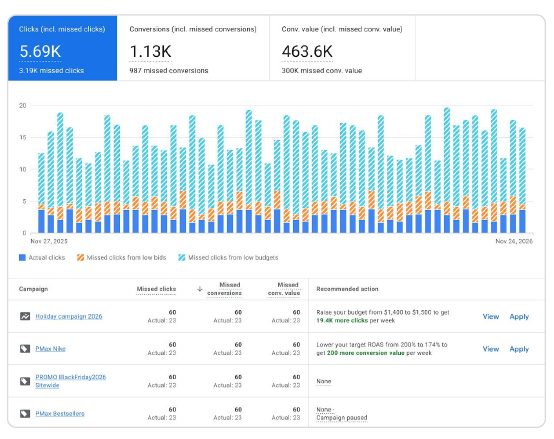
What Is The New Missed Opportunity Reporting In Google Ads
Missed Opportunity Reporting is Google’s attempt to replace impression share with a more honest view of lost demand. It’s useful, but not perfect. This post breaks down why Google built it, how to read it, and where it falls short — especially for advertisers who need profitability, not just more auction participation.

Why You Should Choose Sarah Stemen for a Second Opinion on Your Google Ads Account
A lot of founders come to me because their Google Ads account feels “off,” but they can’t explain why. The numbers look fine, yet the leads feel wrong, the spend feels unstable, or the agency’s explanations don’t line up with reality. My work gives you a second opinion grounded in 17 years of hands‑on experience, deep diagnostics, and founder‑first honesty. I uncover the quiet failures, structural risks, and misaligned strategies that cost you the most — and give you clarity you can act on.

Is Google Ads Worth It in 2026? (An Honest Answer From a Former Agency Insider)
Google Ads still works in 2026 — but only when your tracking, offer, and economics support it. This guide breaks down real ROI benchmarks, rising CPCs, common failures, and a simple framework to decide if Google Ads is worth it for your business.

What Is a Google Ads Audit? (And Why Yours Probably Needs One)
There's a version of a 'Google Ads audit' that a lot of agencies give away for free. It's a PDF with screenshots. It tells you your Quality Score is low and your CTR could be better. Then it recommends you hire them. That's not an audit. That's a sales pitch in a PDF. Here's the difference.

Is Your Google Ads Account Over-Engineered? Why You Need a "Second Look" Validation
Most business owners don’t realize their Google Ads account might be too fragile to “fix.” This post explains why switching agencies without a diagnostic audit can tank performance and how a neutral second opinion protects your budget, your stability, and your sanity.

I Need Google Ads Help: Where to Start, What to Fix, and Who to Trust
If your Google Ads costs are rising while leads drop, the problem isn’t you — it’s the platform’s complexity. I break down the real reasons accounts fail in 2026 and show you how to diagnose tracking issues, wasted spend, and misleading reports in under 30 minutes. Get clarity before you spend another dollar.

Google Ads Agency Red Flags: 12 Warning Signs to Avoid Costly Mistakes
Stop wasting your ad spend. Discover 12 critical Google Ads agency red flags, from withheld account access to vanity metrics and broken tracking. Learn how to audit your agency’s transparency, ask the right interview questions, and protect your ROI with insights from a Top 100 PPC Strategist.
Ads Experiences in the New Era of Search: What Google Just Revealed About the Future of Ad UI
Google just revealed how Search Ads will actually work in an AI-first world — and it’s bigger than UI tweaks. From fluid assets to Direct Offers in AI Mode, here’s what advertisers need to understand before these changes reshape 2026.

Google Ads Daily Spending Strategy: A Complete Guide to Strategic Budget Management
Most advertisers set a daily budget and hope for the best. I help you move beyond passive distribution to a deliberate spending framework. Learn how to implement strategic budget pacing and performance-based allocation that protects your margins and aligns every dollar with your actual business goals.

Google Ads Optimized Targeting: The Complete Guide to Protecting Your Ad Spend in 2026
Is Google Ads spending your money on the wrong people? Optimized targeting is enabled by default on most new campaigns, but without the right guardrails, it can obliterate your margins. Learn the "50-conversion rule," why you must disable expansion on remarketing, and how to maintain total control over your advertising data in an increasingly automated world.
PMax Audience Signals: How to Guide Google’s AI Toward Your Best Customers
Audience signals are the steering wheel of your PMax campaigns. They aren't just "targeting rules" they are the fuel that helps Google’s AI find your next best customer. In this deep dive, I break down how to leverage first-party data, custom segments, and search intent to shorten the learning phase and improve lead quality. Plus, get a step-by-step walkthrough of the interface and the "pre-flight" checklist every account needs.

PPC Coach: Learn Google Ads with Protective PPC™ (Without Paying a Forever Retainer)
Stop Paying a Forever Retainer. Most business owners think they only have two choices: struggle with Google Ads alone or hand over a massive monthly check to an agency. I’m showing you a third way. In this post, I break down the Protective PPC™ approach—how I coach you to own your account, stop the "Automation Tax," and build a profitable system you actually understand. No black boxes, just results.

Google Ad Daily Budget: How Much Should You Really Spend Each Day?
What is a good Google Ads daily budget in 2026? Learn how to calculate your spend based on target CPA, CPC ranges, and the "30.4 rule." Avoid the learning limbo and find out why $10/day might be starving your success.

Google Ads for Therapists: Your Complete Guide to Success
A complete roadmap for therapists to run high-ROI Google Ads campaigns without compromising clinical ethics. Discover how to navigate Google’s medical policies, ensure HIPAA-compliant tracking, and stabilize your caseload in the 2026 landscape.

How the 2026 PPC Landscape Has Changed: Introducing Protective PPC™
Navigating paid ads has become a high-stakes game for businesses in 2026. With platforms pushing 'black-box' automation and rising costs, the old ways of managing spend are no longer enough. I am introducing Protective PPC™ a framework built to give business owners the guardrails and transparency they need to stop wasting budget and start driving revenue.