Stop blaming yourself for a "Black Box" you didn’t build.
Everyone in marketing wants your money.
The platform profits when you waste money. The agency profits when you spend it. You are the only one incentivized to save it.
I wrote this blog to expose the "Black Box" and show you how to protect your business. I don't sell management. I sell the solution you need to stop losing money on ads.
Search all blog posts:

The Google Ads Cost & Minimum Budget Hub
Google Ads costs feel chaotic until you understand the math behind CPC, intent, pacing, and minimum viable budgets. This hub gives you a clear, diagnostic map to stop wasting money and finally understand what your budget can — and can’t — do.

How to Improve Google Ads Targeting
A client selling tax-preparer certification software kept getting clicks from people who just wanted to file their own taxes. The targeting settings were fine. The chain between keyword, ad, and landing page was broken, and that's almost always the real problem.

Google Ads Signals & Value Hub
The Google Ads Signals & Value Hub is a clear, diagnostic map that explains how Google interprets behavior, how signals influence learning, and how value‑based bidding actually works. This hub organizes the core concepts practitioners must understand to protect their budget, diagnose performance, and make smarter decisions in a signal‑driven ecosystem.

The Therapy Ads Math Problem
This Google Ads for Therapists Hub gives you a clear, diagnostic map of why therapy ads fail — and the four math failures that quietly break them. Instead of hype or generic marketing advice, you’ll find therapist‑specific guidance that explains the structural issues baked into the auction, the category, and the way therapy actually works. Each section helps you diagnose the real problem behind your symptoms and points you to deeper, practitioner‑level guides that show you how to fix them without fear, pressure, or platform noise.

Google Ads Budget Optimization Strategies: Agency Red Flags and How to Protect Your P&L
Tired of Google Ads reports that show plenty of "activity" but no profit? Many agencies substitute genuine, analytical strategy for superficial account management, turning your ad budget into a silent P&L risk. Learn the three strategic alternatives a paid search expert uses to isolate profitable keywords, run high-impact tests, and stop budget leaks for good.

Google Ads Maximize Conversions Daily Budget Spending Strategy: Why Your Budget Explodes And How to Fix It
Switched to Maximize Conversions and your budget suddenly exploded? This post breaks down why Google spends so aggressively, what’s actually happening inside the algorithm, and the guardrails you need to protect your budget without killing performance.

How Long Does It Take For Google Ads To Work? The Real 8–12 Week Timeline
Google Ads campaigns start delivering clicks within 24–48 hours, but for a campaign to truly work, meaning it generates consistent, profitable leads or sales, you must commit to an 8–12 week optimization cycle. The first month is the crucial Activation & Learning Phase where performance will be wildly inconsistent. This instability, often characterized by high cost and few conversions, is the necessary price of buying data that feeds the algorithm. Resist the urge to panic or make major daily changes during this period, as you will reset the learning clock.
Stay focused on ensuring tracking is perfect and aggressively cleaning up irrelevant searches with negative keywords. Consistent, profitable results will emerge in the subsequent weeks, validating the patience required during the initial phase.
What Is Value Based Bidding
Value-based bidding (VBB) is a Google Ads strategy that assigns different dollar values to different conversions (like $50 for a form fill vs. $10 for a phone call). Instead of chasing raw lead volume, it trains the algorithm to prioritize the actions that drive the highest actual revenue for your specific business.
Is Your Google Ads Account Underperforming? Here’s When a PPC Coach Becomes a Smart Investment
If your Google Ads campaigns feel unpredictable, expensive, or confusing, you’re not alone. After 17 years auditing PPC accounts, I see the same issues over and over: wasted spend, bad tracking, and the wrong bidding strategy. Here’s how a PPC coach helps you fix what’s broken and finally get consistent, high‑quality leads.
Google Ads Budget Pacing: How to Control Spend, Protect Profit, and Stop Google From Spending Your Budget Early
Google Ads budgets aren’t daily caps…they’re averages. Google can spend up to 2× your daily budget, recalculate pacing mid‑month, and shift spend based on signals, constraints, and inventory. All of this causes anxiety.
This guide breaks down how budgets actually work, why pacing goes off the rails, and how to protect your money with better structure, better data, and smarter oversight.

What Are High-Value Signals in Google Ads?
High‑value signals in Google Ads cut through the noise and show Google’s AI exactly who your best customers are — and how much they’re worth. Learn how identity, intent, action, and feedback signals transform campaigns from wasted clicks into profit‑driven growth.

Stop Treating Client Ad Accounts Like Monopoly Money
Most people don’t realize this, but the biggest threat to their Google Ads account isn’t Google — it’s letting someone “learn as they go” inside a live budget. In this article, I break down the hidden epidemic of untrained operators treating client ad accounts like Monopoly money, why confusion has become a billable hour in the industry, and how business owners can protect themselves from irreversible damage. If you’ve ever wondered whether the person running your ads actually knows what they’re doing, this is the clarity you’ve been missing.

Why Your "All-In-One" Agency Is Wasting Your Ohio Therapy Practice's Ad Budget
A generalist agency will run your therapy practice's Google Ads exactly like they'd run a plumbing company's, default settings, no HIPAA-safe tracking, no idea why "therapist near me" can trigger a policy flag. Here's the real Ohio math on what a client should actually cost you, and why the fix isn't a better agency, it's owning the account yourself. Excerpt (short): Your "all-in-one" agency is running your therapy practice's ads like a plumbing business.
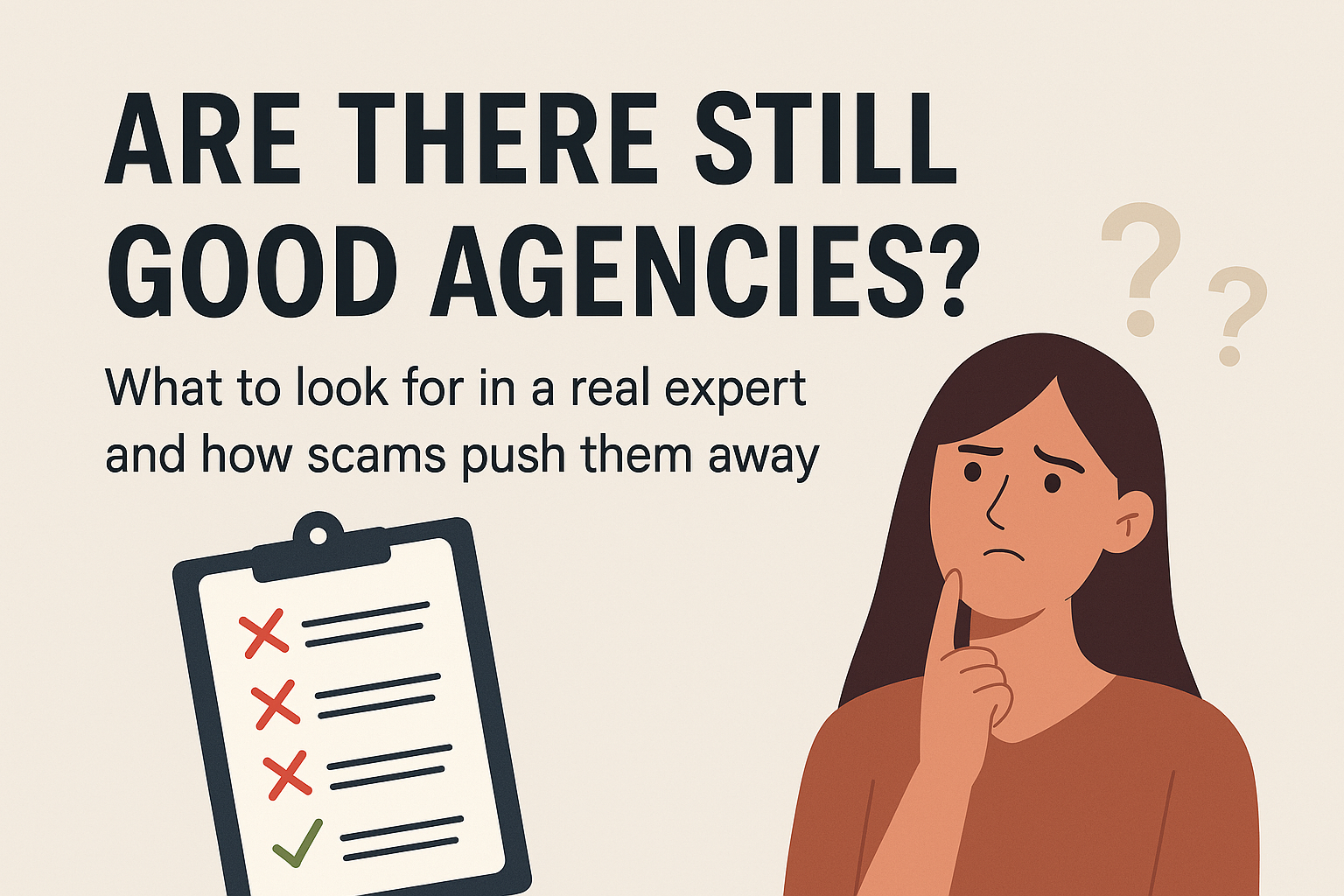
Are There Any Good Marketing Agencies? The Truth Business Owners Deserve
Wondering if good agencies even exist? You’re not alone. The agency model is broken — but real experts do exist. Here’s how to spot the red flags, find the rare good ones, and protect your business from the most common agency traps.

How to Track Clients Leads in Honeybook with Google Analytics and Google Ads
Stop flying blind. Third-party CRMs are "walled gardens" that break standard conversion tracking. Learn how to bypass this limitation using Squarespace and the modern Google Tag to ensure every lead is counted in both Analytics and Ads.

The Day the Leads Stopped: A Cautionary Tale About "Ego Bidding"
A client called me in a panic: "We have zero conversions." The culprit? A single setting change designed to "get their brand out there." Read the story of how chasing visibility almost torched their ROI, and why "Ego Bidding" is the most dangerous trap in Google Ads.

How to Calculate Your Google Ads Daily Budget: The "Reverse-Budget" Formula
Picking a budget isn't a guessing game; it's a math problem. Most small businesses fail not because their ads are bad, but because they are "Deficit Budgeting." In this technical guide, I break down the exact formula I use to audit enterprise accounts. Find out if your current budget is mathematically impossible before you spend another dime.
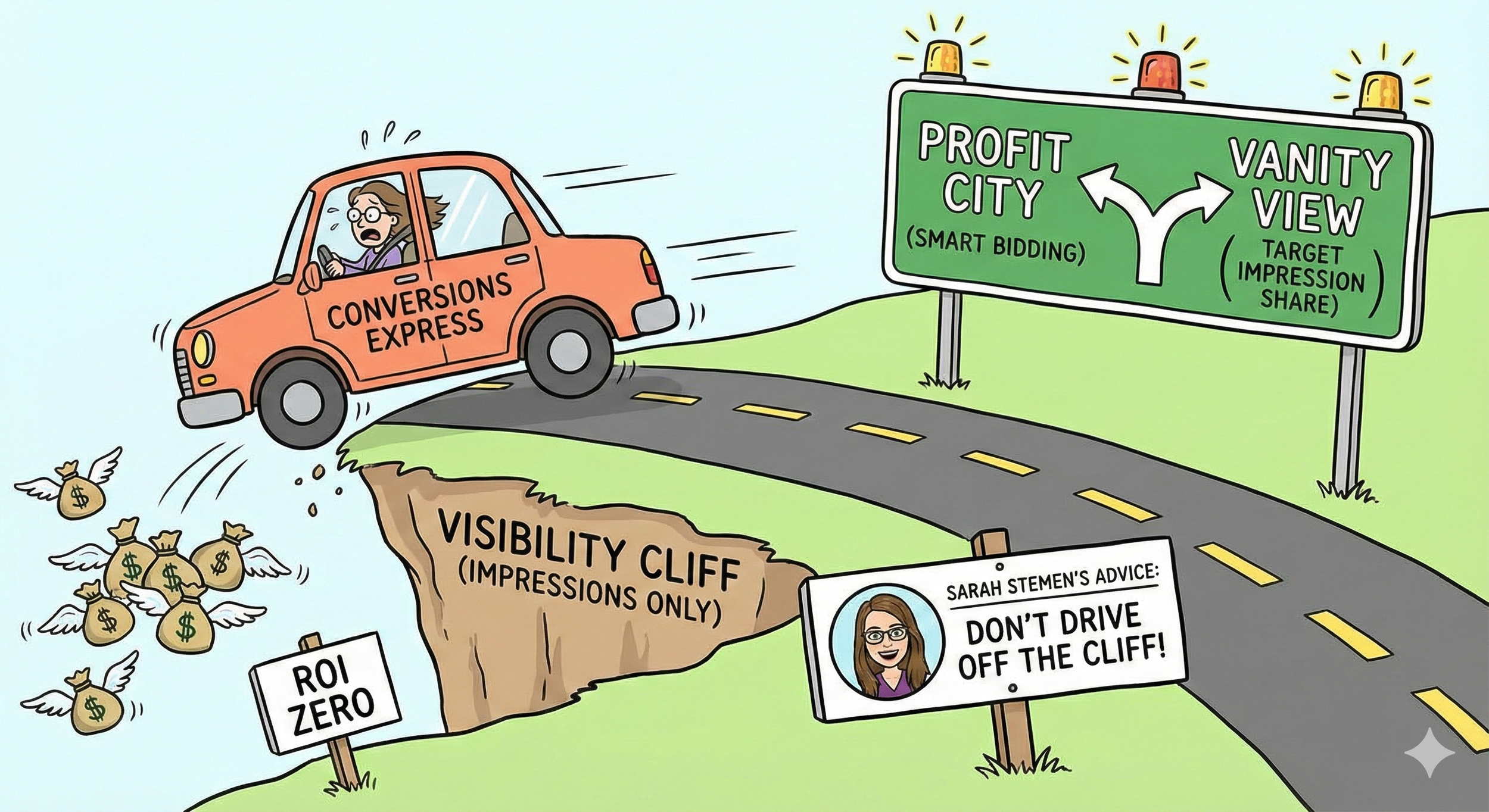
Target Impression Share vs Max Conversions: A Technical Guide
I want to dominate the top of the page."
This common request is often the fastest way to kill your ROI. In this technical breakdown, I explain the algorithmic difference between the "Ego Bid" (Target Impression Share) and the "Action Bid" (Maximize Conversions) and why you can't have both.

Is $20 a Day Enough for Google Ads? The Truth About Small Budgets
Is your $20/day Google Ads budget working? If not, the problem isn't the size of your budget—it's the massive, invisible waste in your setup.
The reality is this: Most small accounts lose $100–$300 a month to 'Hidden Costs' like terrible Quality Scores, irrelevant clicks, and lazy negative keywords. That wasted $1,800 a year is guaranteed to continue.
My $750 Hidden Cost Protection Plan stops that waste immediately. This isn't an expense; it's a one-time investment that pays for itself in just a few months by simply recapturing the money you were already spending inefficiently. Stop paying the Google 'inefficiency tax,' and start building a profitable foundation today."

Thinking Of Leaving Your PPC Agency? Not So Fast
Most companies think they only have two options for running paid search campaigns: pay an expensive PPC agency retainer forever or fire them and go it alone.
There is a third option. Here is how to identify if your business has "graduated" from the PPC build phase, and how to switch to a strategic advisory model that saves agency fees while protecting PPC performance.