I Was in the Room at Google Marketing Live 2026. Here's What It Actually Means
I started writing this from the airport before I even got on the plane to San Francisco and continued to write on the plane home.
Something about GML this year felt different before I even landed (maybe it was the airport and flights being delayed at every turn).
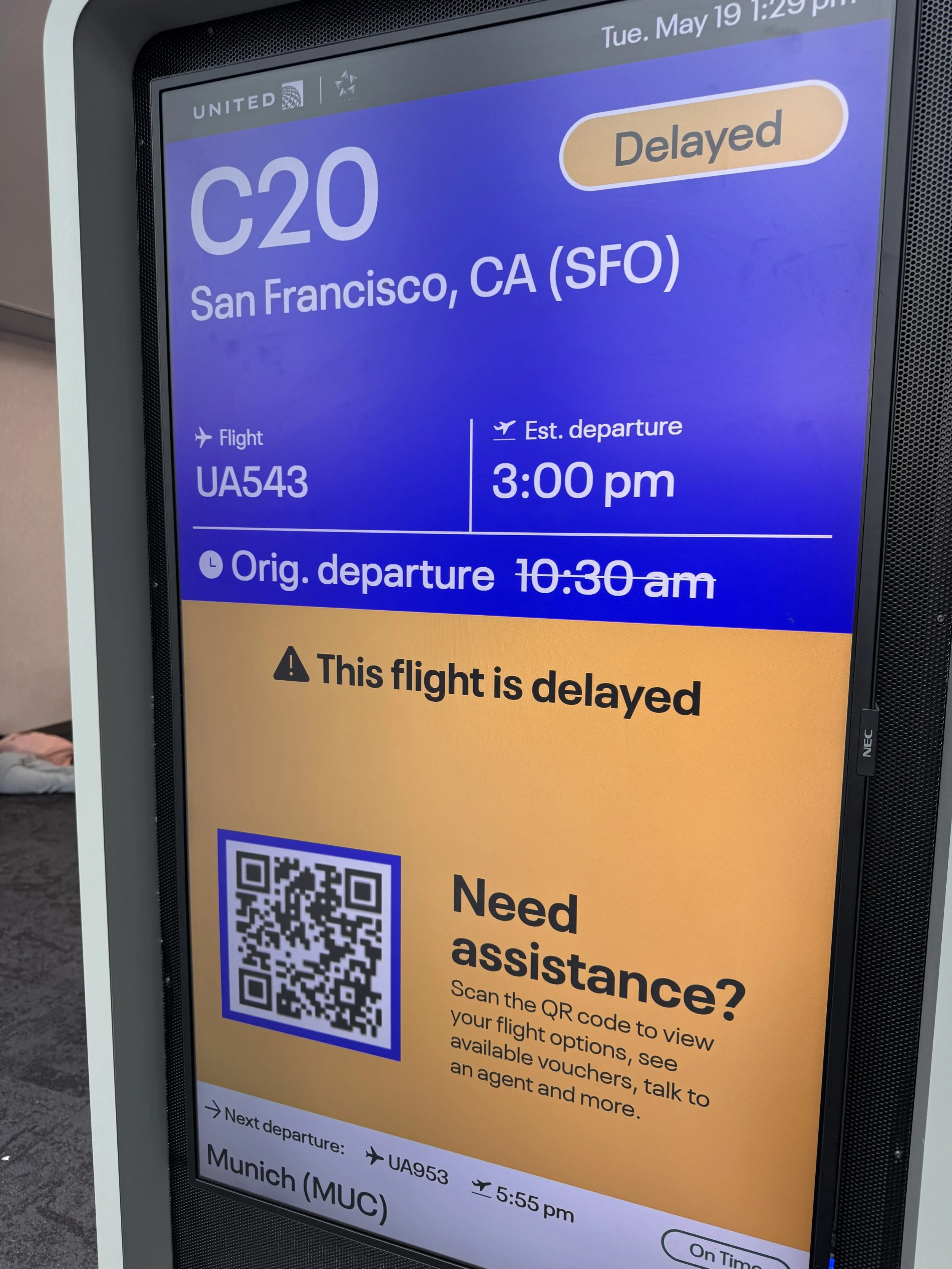
A long day of travel delays getting to Google Marketing Live in Mountain View
I've been attending Google Marketing Live online for years (in fact one year I watched from a pool in Florida), but going in person and being invited in person is something I will forever put into the bucket of the biggest accomplishments and experiences of my professional life. I never take that privilege for granted.
This year I treated the trip differently. I bought a new computer (a pink Mac Neo) because I wanted to be able to write content and bring it back to my blog as quickly and genuinely as possible, for myself and for the people who read what I write.
And here I am, sitting in the San Francisco airport on the way home, eating a Pinkberry frozen yogurt (with gummy bears and m&m topping with an hour and a half before I board, and I'm still thinking about everything we learned and talked about at GML.
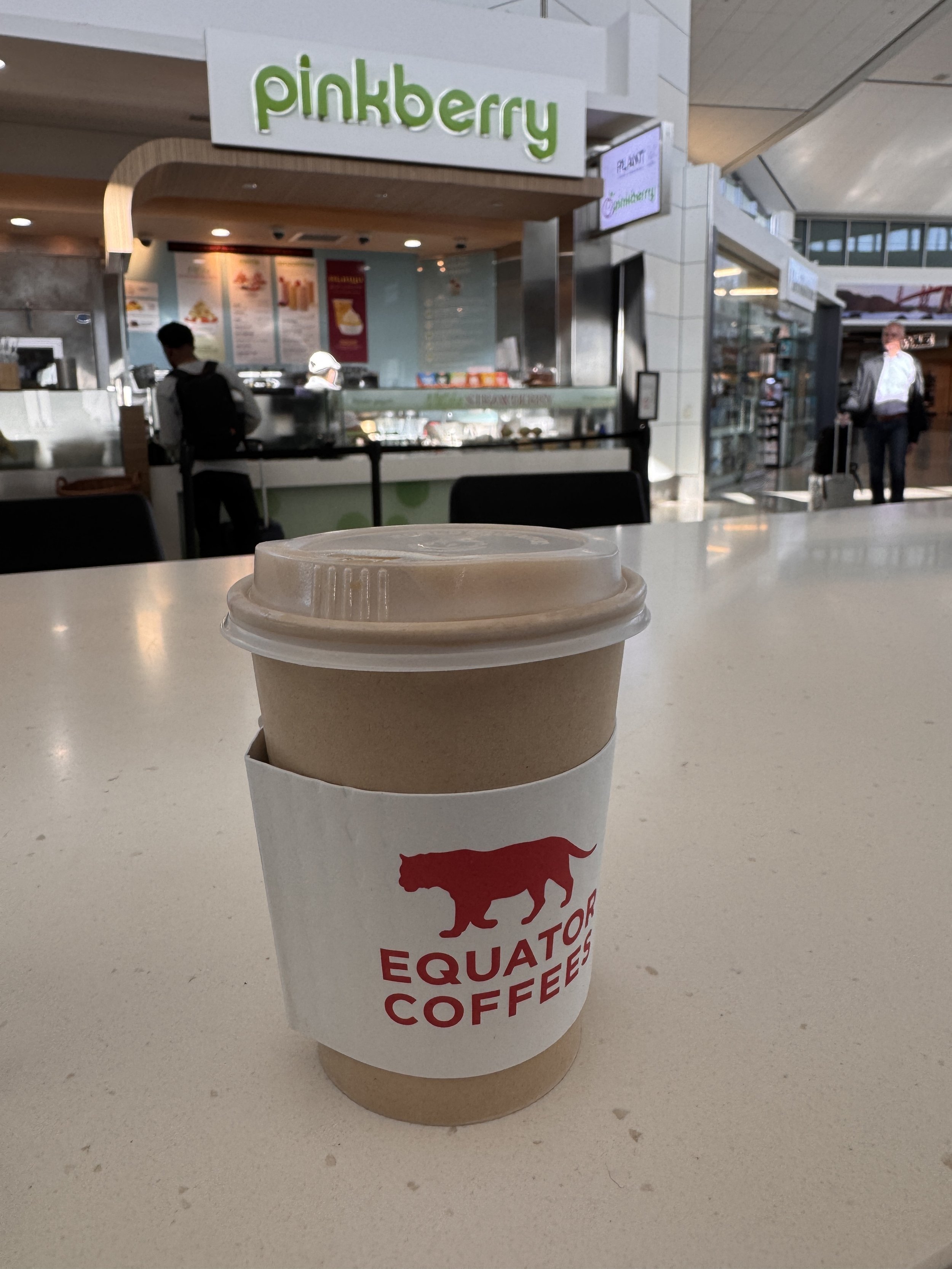
Coffee and Google Ads blogging time in the airport
So let me tell you what GML actually is, what it was like to be there, what I think about the biggest announcements, and honestly what I don't care about at all. Because if you want the real version of GML, not the press release version, you're in the right place on my blog.
I am also adding my pictures here too because why not add the fun parts too?
What Actually Is GML?
GML, or Google Marketing Live, is the annual event where Google releases its newest product updates for the advertising ecosystem. It is a massive deal for anyone who works in Google Ads.
But here's what a lot of people don't realize: the intended audience is executives and high-level CMOs at large companies. These are not people who are in accounts every day. These are not the people who caught that Maps in Demand Gen feature four to six months ago when it quietly rolled out. So when you hear about something at GML that you've already been using, don't be confused as to why that happens. That's just how the event works and has always worked.
As practitioners, GML is our chance to piece together where Google is heading so we can stay ahead of it. We analyze every word spoken. We probably overanalyze. That's our job.
What Going In Person Actually Means
Being there in person is an entirely different experience, and there's no other way to say that. Sometimes online it feels “lame” but in person you are able to take in more information and more “signals” to use a Google term.
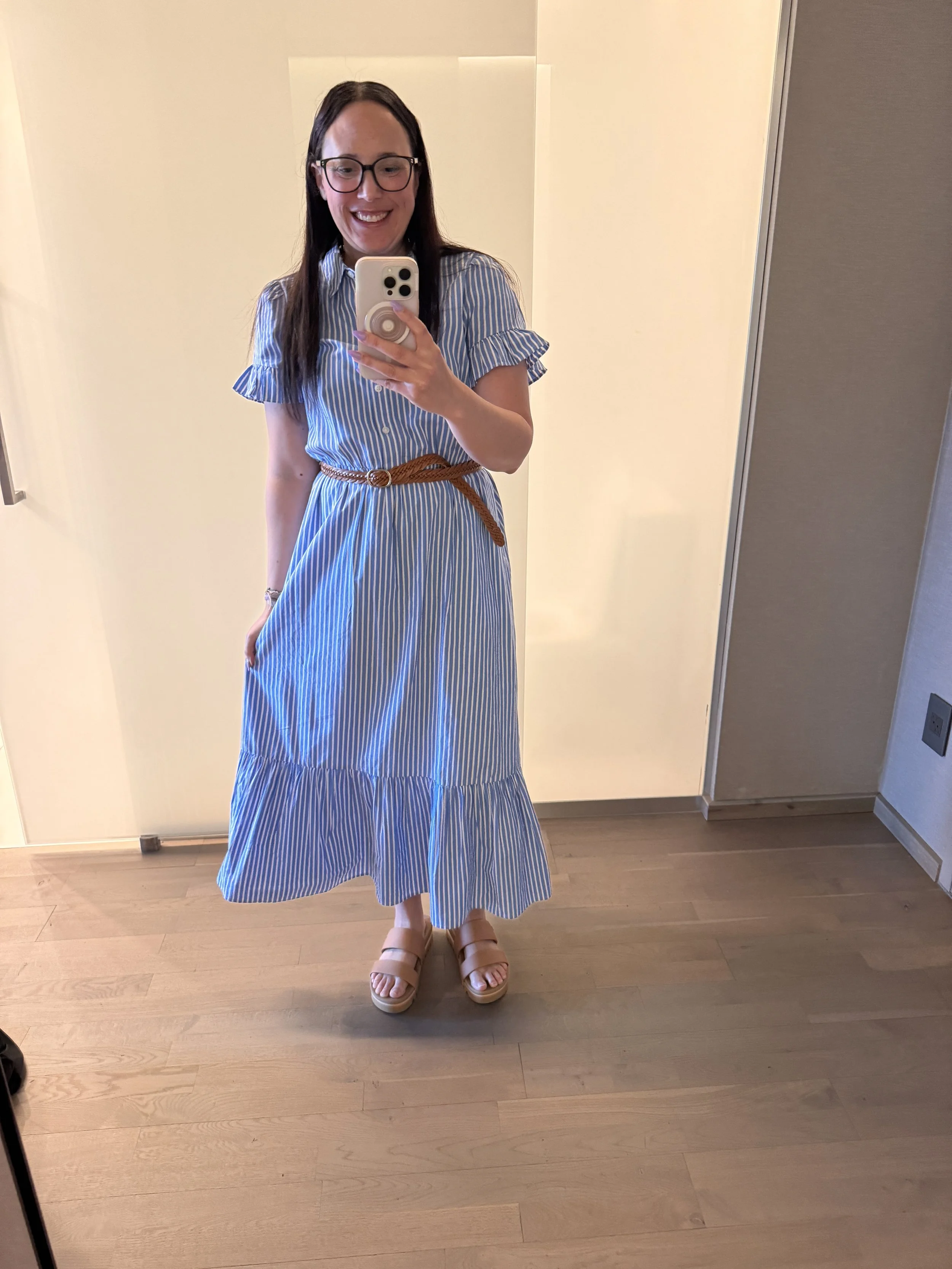
As someone who works from home, on the internet consulting about Google Ads, I am happy to have GML as an excuse to look nice.
After the keynotes, we spend the afternoon with the product managers and other Google Ads experts. These are conversations I cannot quote. I am under strict NDA. But I can tell you this: those conversations are some of the most valuable hours of my professional year. I can ask questions that aren't in any help documentation. I get real answers from the humans who are actually building these products, these are the people with years of experience, deep expertise, and a genuine passion for what they're working on at Google in Mountain View.
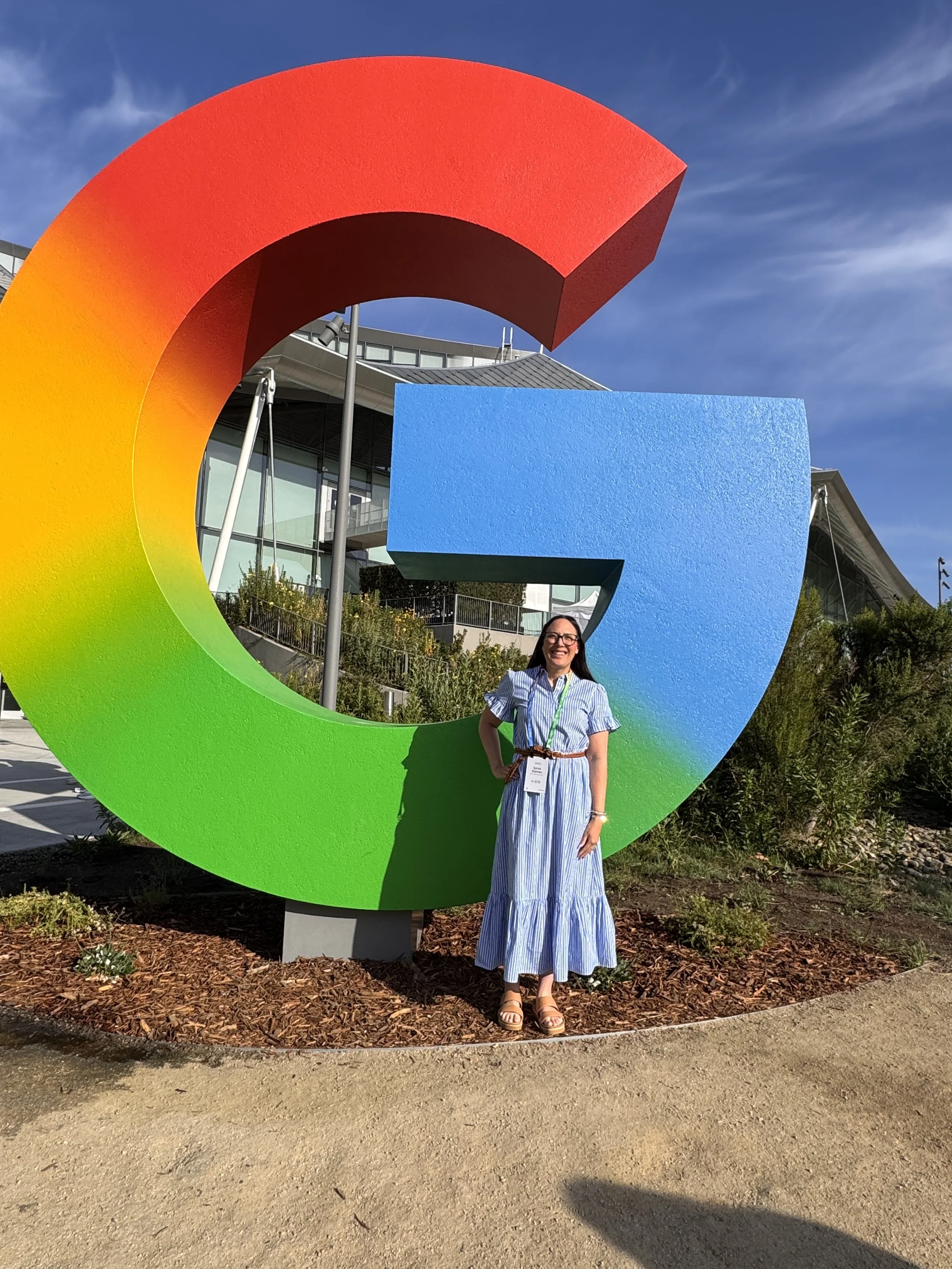
Hopefully this will be an annual picture and photo opportunity. Very grateful to be here.
I also get to spend time with other agency owners, educators, and Google Ads trainers like myself. We process everything together. We compare notes. We disagree, we align, we figure out what we actually think. And all of us there are content creators so we are all taking in the information while simultaneously asking ourselves what this means for our client and what is our unique perspective.
There's something else about going in person that I want to name, because I think it matters: being there is genuinely inspiring as a business owner and content creator. You'll openly see industry colleagues talking into their phones scripting podcasts, leaving voice memos, filming on campus, taking photos of slides and food and the Google campus itself. For someone like me who creates content to fuel my business, it feels incredibly empowering to just be myself and not hide the fact that I'm documenting the whole trip start to finish.
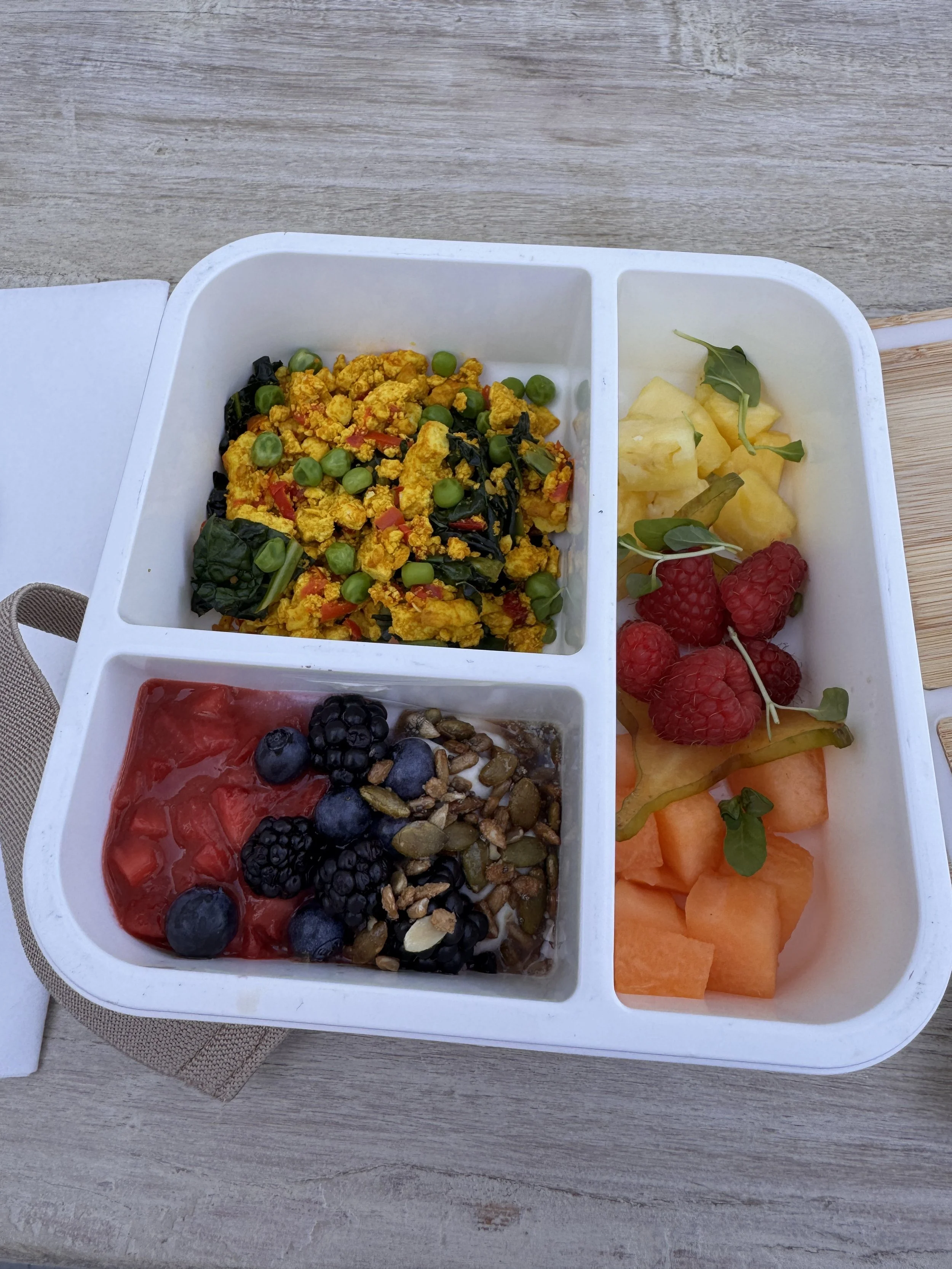
Yes, the food at Google is absolutely perfection
I found myself sitting in the airport watching people walk through again, as I am writing this post bags in tow, looking at shops, killing time and thinking: the tools Google is giving us are going to be genuinely life-changing. Not in a hype way. In a real, structural way. Because we are all humans so connected in everything we are doing through life. All this airport watching includes people observing people constantly connected to their screens (healthy or unhealthy a whole debate in itself).
All this said, when people asked me what I was most excited about, I kept stumbling on the answer. Because it's not really a specific feature. It's the moment we're in today in 2026. We are in the middle of a massive transformation, and that puts us in a place where we have to be introspective about how we ourselves use the new technology and then layer that in with everything we already know about marketing.
Marketing is an art and a science. The art side of marketing requires us to look inward and observe our own behavior. The science side of marketing marries that anecdotal and observational perspective with data from our actual customers and the masses. Right now, in 2026, post-GML, both of those things are being completely renegotiated.
The Theme That Runs Through All of It
Before I break down the announcements, I want to give you the frame I came home with the one that I think explains GML 2026 better than any headline.
Google is making execution easier and strategy harder.
That's it. That's the whole event in one sentence.
On the execution side: campaigns are more automated, creative generation is getting faster, measurement is getting cleaner, and AI is handling more of the tactical layer every year. That's real, and it's mostly good at least from my perspective. And if it isn’t “all good”, I have accepted I can’t fight it but need to work with it.
But on the strategy side? It is getting genuinely more complex. The decisions you have to make about where to show up, what context to give the AI, how to define your target audience, what your measurement plan actually means and more require more nuance than ever, not less.
Here's why that matters for my business as a Google Ads consultant, and maybe for yours:
I have spent 17 years inside Google Ads accounts doing the actual work. I've watched this platform evolve, break, rebuild itself, and reinvent the rules of performance marketing more times than I can count. And the easier execution gets, the more valuable a real strategist becomes. The more valuable the why becomes. Because anyone can push the buttons. Not everyone knows which buttons to push and why. And for me I understand more than the why I understand how the system was built.
So this year in 2026, I left Google Marketing Live 2026 optimistic and excited about my own business. (video addresses this point better IMHO)
That might sound strange given how much is changing. But it makes complete sense if you understand that what's changing is the balance between execution and strategy and strategy is where I live.
Ads in AI Mode: The Announcement We'll Be Talking About for Years
Let's start here because this is the one. This is the announcement that I think transforms how we think about advertising as a whole, and I don't say that lightly.
Ads in AI Mode, this is Google's new ad format testing inside Google's AI Mode and it is fundamentally different from everything that came before it, and the difference comes down to one thing: it's a 1:1 relationship inside a chat.
On a traditional SERP, any given query could generate multiple ads. Multiple advertisers competing for the same space. Google has always talked about "the right ad at the right place" but the right ad at the right place has always meant several possible ads in several possible positions. That was the game and this was the auction dynamics at play.
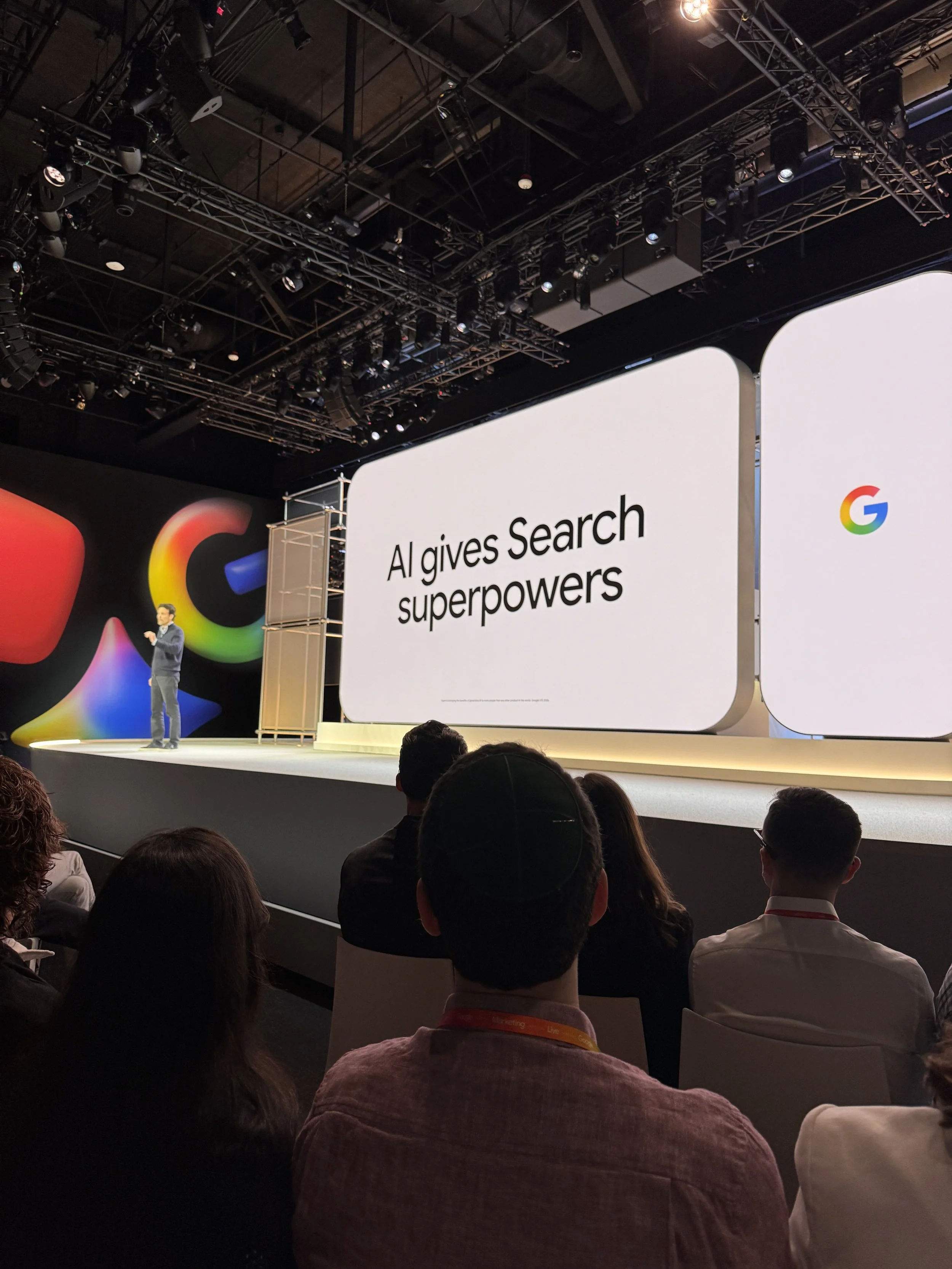
“AI gives Search superpowers” - I love a great quote at GML
Ads in AI Mode flattens that curve. Only one ad will be shown for a given query. One. The relationship between query and ad becomes singular and deeply contextual in a way that is going to need to be understood and learned as it evolves.
There are three formats currently in testing:
Direct Offers, Conversational Discovery, and Highlighted Answers.
Each one is designed for different stages of how a user is engaging with AI Mode which is very interesting because I think this is Google trying to have some tiered cost and funnel aspect. So for the user whether they already know what they want, they're exploring options, or they need more information before deciding, Google Ads has a format.
This is how I understand the new formats, so keep that in mind.
Now, I have more information here than I'm free to share under NDA, so I'll stay in my lane. But here's what I would tell any client right now, based on what I know:
1. Work on your website. Make sure it's structured well. Clean SEO. Best practices so Google's crawlers actually understand your business. This isn't new advice, but in an AI Mode world it becomes non-negotiable. Yes we have been saying this for years.
2. Focus on your conversion tracking and measurement plan. Having clean data, clear conversion definitions, and a real understanding of what actions have value to your business is more important now than it has ever been. If your measurement is messy, AI Mode is going to make that messier. This is the whole, Ads is a magnifying glass on your business
3. Do the deep work to understand your customers. Map out the touch points and the contextual reasons why someone might be interested in your brand. AI is looking for context. Give it context. I do this in my own business regularly and it has been one of the core reasons for my success this year. I went through a deep analysis of my customer to understand their pain points.
4. Think about whether AI Mode is the right place for your ads. This is an honest business question. Where does your company stand from an ethics standpoint? What's your risk tolerance? Not every business should be in every placement, and now is the time to have that conversation internally, because it is definitely not after you're already showing up there.
5. Think about who you're for and who you're not for. Are there unconventional uses of your product where you wouldn't want AI showing your ads? Are there search patterns that pull your brand in a direction you don't want? These are things you need to know before the algorithm decides for you.
6. Think seriously about your content strategy. We have been saying for years that PPC and SEO need to work together. This is a whole new level of that. The context and meaning behind your brand is now directly relevant to how and where your ads are served. What is your plan for communicating that alignment to your customers? Are you working with your SEO team and do you have an official process for this today?
One more thing on Ads in AI Mode: the flattening of the funnel doesn't mean the funnel is dead. I think that is a misunderstanding. An ad in AI Mode can serve as awareness, consideration, or conversion depending entirely on how the user is searching (hence the AI Overviews formats). You have to think about your measurement and your thresholds with that complexity in mind.
And brace yourself for the conversations.
If you're reading this, you have business partners and stakeholders, and there are going to be questions. Some businesses will want to be in AI Mode because they want to be seen as cutting edge. Others will have concerns. I encourage everyone to think through these questions in advance, because they're coming whether you're ready or not and again you may be the one responsible for putting together the educational deck and explaining it to someone who thinks they understand how “search” works and can apply those same concepts to 2026.
What I Actually Think About Ask Advisor
I'm going to give you a more nuanced take on Ask Advisor than you'll hear anywhere else, because I think the way most people are framing this tool misses something important.
Ask Advisor is Google's AI agent that works across Google Ads, Analytics, Merchant Center, DV360, and SA360.
The vision is an intelligent assistant that can help you navigate the entire ecosystem. I had a sidebar conversation with another PPC influencer at GML, and we both landed in the same place: we're not chomping at the bit to use Ask Advisor on the ads side, but we see tremendous use for it on the analytics side.
Here's why, and this is the part I think matters: on the ads side, the ask is execution. You're asking the tool to do something. On the analytics side, the ask is questions and discovery (my POV) you're asking what the data is telling you. The feature and the intent align much better on the analytics side. That's not a knock on Ask Advisor. That's just an honest read of where it fits.
For my clients? Ask Advisor on the analytics side means faster answers to questions they used to have to dig for. And for me? More time for the strategic layer. Which, if you've been paying attention to the theme of this whole post, is exactly where I want to be spending my time.
So yes, Ask Advisor is on both my "care about" list and my "don't really care about" list. The distinction is where it's being used.
The Measurement Updates That Matter (Even If They Didn't Get the Loudest Applause)
At GML, the loudest announcements are rarely the most important ones. That's something I've learned over many years of watching this event.
This year, the measurement updates deserve serious attention from anyone who manages Google Ads for a living.
AI Max for Search is now generally available out of beta since April 2026. The numbers are real from Google: campaigns using text customization plus final URL expansion are seeing 7% more conversions on average (secretly even pre-GML my fellow PPC experts have been admitting it is working for them).
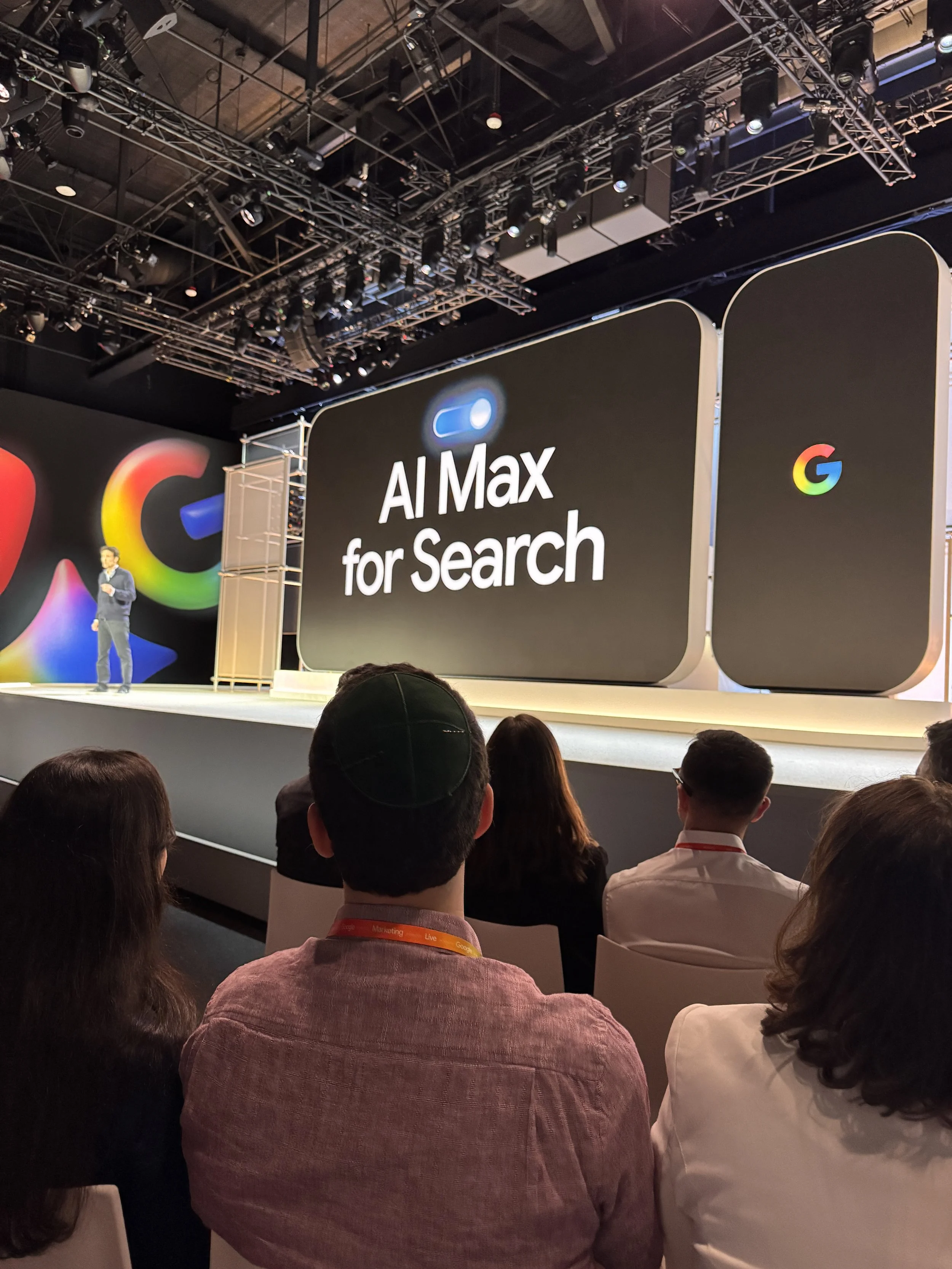
Can we just admit a slide from Google at GML saying, “AI Max for Search” just hits differently?
Anyways, that's not a rounding error from Google’s published data. AI Max uses machine learning to customize your ad text and expand the URL a user lands on based on their specific query. For clients running search campaigns, this needs to be on your radar now because I think like it or not other advertisers are seeing success here.
Qualified Future Conversions is a new metric that attempts to predict the long-term revenue potential of upper-funnel users, not just what they did today, but what they're likely to do down the road. This is Google trying to give you a more complete picture of value. I'm watching this closely. I am watching this because I am working on a client with a long decision making time frame (PS. If you work with me I think of your account all the time)
Smart Bidding Exploration is expanding to Shopping, and the early data suggests it surfaces 27% more unique converting users. This is the AI finding converting audiences that traditional bidding would have missed. I personally felt this had value and use cases on search so this is something I am going to be watching.
Enhanced Conversions are being unified, web and lead into a single streamlined module. This is a cleanup that has been needed for a while. Thanks Google!
Data Manager is becoming a universal data hub across Google Ads, SA360, and Campaign Manager 360. Clean data in, better decisions out. This is the “brocolli” to use a Google Marketing Live joke but significant.
And then there's Meridian which is Google's open-source marketing mix modeling suite which is getting new additions including Meridian GeoX and Meridian Studio. For anyone doing serious measurement work, this is a toolkit worth understanding.
Measurement is where the strategy lives in 2026. The data is getting richer and this is where the power lives today. The models are getting smarter even if we don’t want to admit it outloud. If your measurement plan isn't keeping up, you're going to be flying blind while everyone else has a map.
A Quick Word About Maps in Demand Gen
Yes, Google announced Maps ads in Demand Gen at GML.
I wrote about this four to six months ago. It's not new.
This is a great reminder of who the GML audience actually is. These are executives at large companies with teams and agencies running their ads. They may not have caught the quiet rollout earlier this year. So Google is formalizing it on a big stage.
If you're in accounts every day, you're probably already aware of this. If you weren't, now you are.
The Creative Side: Asset Studio and What's Coming
On the creative front, Asset Studio is Google's attempt to bring multimodal asset generation under one roof. We're talking text, image, and video creation all powered by Gemini, Veo, and other Google AI tools. (Stay tuned because while at GML I filmed a segment with the Google team about this)
I'll say this: the creative tools are impressive. And they're going to get more impressive. For practitioners managing large volumes of creative across campaigns, this matters. The question I'm asking and the question I'd encourage everyone to ask is how you maintain brand voice and authenticity in an AI-generated creative environment. That's a strategy question and that’s important. And it's one more of many reasons the strategist's role is becoming more valuable, not less.
So What Does All of This Mean For You?
If you're a founder, a business owner, or the marketing team that calls me: here's the honest answer that will tell you on repeat.
The platform is changing in ways that look simpler on the surface and require more sophistication underneath. The buttons are easier to push. The decisions behind which buttons to push are harder to make well. This is why my business is growing today.
This is a moment that rewards the people who do the strategic work, who understand their customers, who have clean measurement, who have thought through their brand positioning, who know what they stand for and who they're for.
It's a difficult moment for people who are hoping the platform will just figure it out for them. Or people who think they can just outsource PPC to a cheap agency or an agency who sells them on “beating Google:
I left Google Marketing Live 2026 genuinely excited. Not because everything is easy. Because the gap between the people who get this and the people who don't is growing and that gap is where I work.
Follow Along Because This Is Just the Beginning
Over the next few weeks, I'm breaking down GML 2026 in detail across a four-part series right here on the blog. We'll go deep on Ads in AI Mode, we'll look at the announcements that matter more than the headlines, and we'll end with what all of this means specifically for founders, business owners, and in-house marketing teams.
If you found this useful and you don't want to miss what comes next, you know what to do.
And if you have questions that you have about GML, about how any of this affects your specific account, about whether you should be panicking or optimistic then reach out. That's what I'm here for.